Tree removal
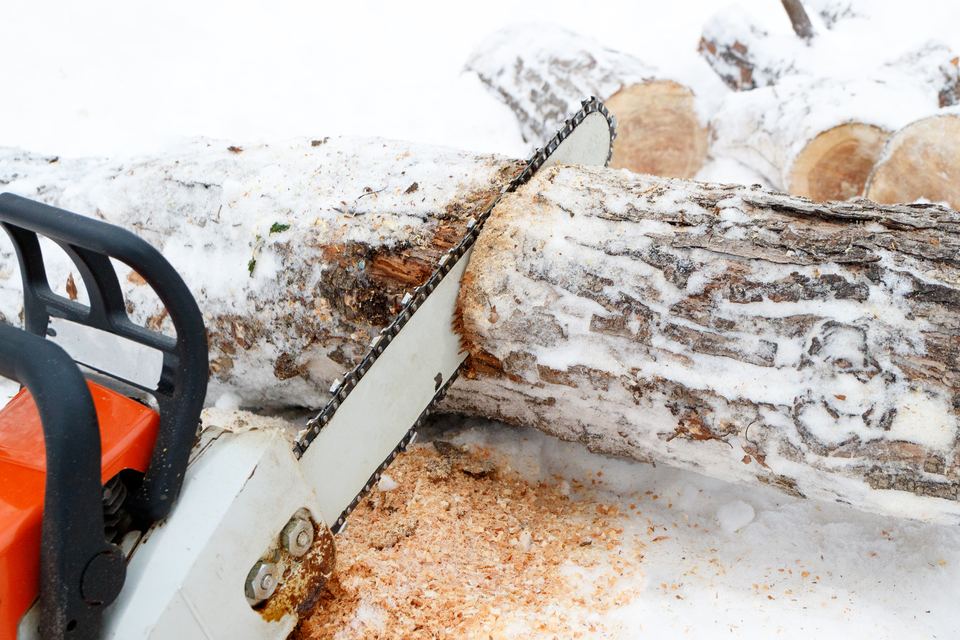
Taking a tree down is easy. Taking it down in pieces, over a roof, between a fence and a power line, without touching either — that is the job.
Most of the trees we remove are ones we would rather have saved: ash lost to emerald ash borer, cottonwoods and elms that have outgrown the space between a house and a power line, a spruce that split in a spring snow. When removal is the right call we say so, and when it is not we tell you that too.
When a tree has to go
Some trees announce it. Others look fine from the kitchen window right up until they are on the roof. These are the signs we look for:
- Dead or dying wood across a large part of the crown, or bark falling away from the trunk.
- Emerald ash borer that has gone too far. A healthy ash can be protected with injections; one that has already lost a large part of its crown usually cannot.
- Cracks and splits, especially where two big stems meet in a tight V with bark trapped between them. Those unions are where Front Range snow loads pull trees apart.
- Decay at the base: mushrooms or conks on the trunk or roots, soft wood, hollows.
- A lean that changed, or soil that has heaved up on one side of the trunk.
- Roots cut by a driveway, a sewer line or new construction.
- The wrong tree in the wrong place: a cottonwood against the foundation, a spruce growing into the service line.
If you are not sure, that is what the inspection is for.
Why removal is not just cutting
Tree work is one of the most dangerous jobs in the country, and removals are the most dangerous part of it. A large limb can weigh as much as a car. It does not fall straight, it swings; and a trunk section dropped carelessly can crack a foundation or a sewer line underneath the lawn.
So a removal near a house is planned like a small construction job. We decide where every piece will go before the first cut: which limbs are lowered on ropes, which sections the crane lifts clear over the roof, where the landing zone is and what protects the lawn and the driveway. Our crews work with a crane for the big ones, a spider lift for tight backyards where a truck cannot go, and climbers for everything in between. The tree comes down in controlled sections, the wood and brush leave with us, and the yard is raked before the truck does.
What a bad removal looks like
The cheapest bid often comes with the costs left out:
- Dropping the whole tree where it “should” fall, next to a house, a fence or a neighbor’s garage.
- No insurance. If a crew without liability coverage damages your house, or a worker without workers’ compensation is hurt on your property, you can end up dealing with it. Ask any tree company for certificates of insurance sent to you directly by the insurer.
- The mess left behind: ruts in the lawn, a broken sprinkler line, a pile of brush “for the city to pick up”.
- Work near power lines by people who are not qualified to do it.
Experience you can see on the job
Arbor Pro has taken down Denver’s trees since 1983, from backyard spruces to the giants at some of the city’s best-known institutions, and our workers are taught by an arborist with more than 50 years in the trade. We are licensed and insured, we price every removal in writing after a free inspection, and we would rather tell you a tree can be saved than sell you a removal you do not need.
If the stump has to go too, stump grinding is usually quoted with the removal.
What tree removal costs
Removals are priced per tree after a free visit, in writing, before anything is cut. The price is set by the tree and the site, not by the calendar: height and spread, which way it leans, whether it is dead or sound (a dead tree is more dangerous to climb and takes more rigging), what is under and beside it, whether the lift can reach it or a crane has to be brought in, and how much wood and brush leaves. Stump grinding is quoted alongside so you can decide. If you want the wood, say so; it changes the price.
Questions we hear about tree removal
How much does tree removal cost in Lakewood and the Denver area?
It depends on the tree and the site more than on the city: how tall and wide the tree is, which way it leans, what sits under it (a roof, a fence, power lines), how a crane, lift or truck can reach it, and whether you want the stump ground. Every removal starts with a free inspection, and you get a written price before any work is scheduled.
Do I need a permit to remove a tree?
A tree on your own lot usually does not. A street tree is different: in Denver, removing a tree in the public right-of-way (usually the strip between the sidewalk and the curb) needs a free permit from the Office of the City Forester, and when you hire a licensed contractor the contractor gets it. Other cities set their own rules for street trees, so ask at the inspection.
Can a tree near power lines be removed?
Yes, but the utility comes first. Only line-clearance-qualified workers may work close to energized lines, so when a tree is in or near the lines that run from pole to pole, the power company has to be involved before anyone else touches it. The line from the pole to your house is a different case; tell us about it at the inspection.
Is stump grinding included?
Stump grinding is a separate service, usually quoted with the removal so you can decide. We grind the stump well below grade and backfill the hole with the grindings or with soil if you plan to plant or seed.
Can my ash tree be saved, or does it have to come down?
It depends on how far emerald ash borer has gone. An ash with a full, healthy crown can usually be protected with treatment; once a large part of the crown has thinned or died back, removal is usually the safer and cheaper choice. An arborist can tell you which side of that line your tree is on.
What happens to the wood?
The tree comes down in controlled sections, the wood and brush leave with us, and the yard is raked before the truck does.