Shrub and hedge trimming
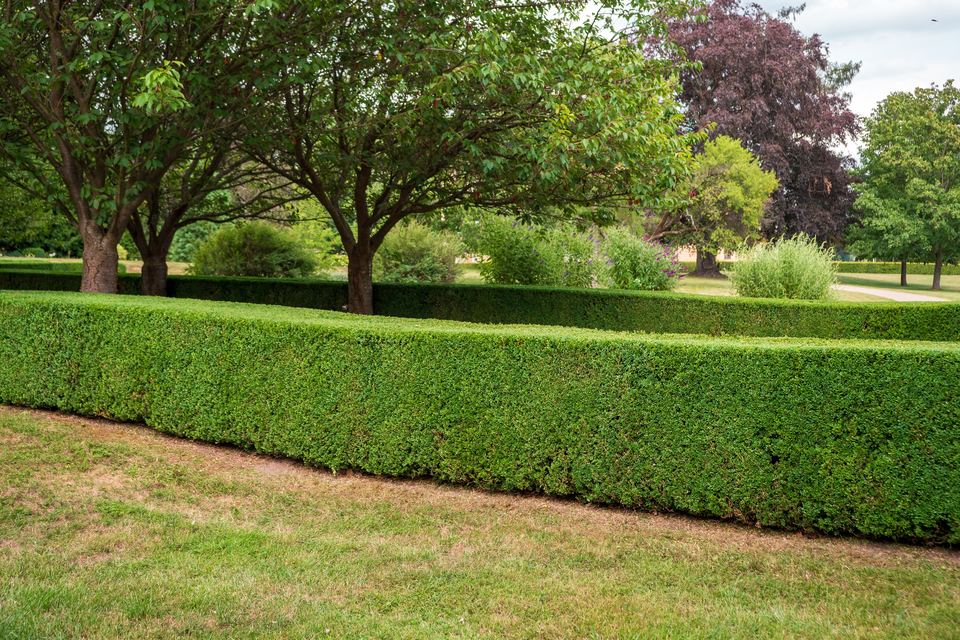
Shrubs and hedges frame a house the way trees shade it. Kept in shape they are an asset; let go for a few years they swallow the windows and the walk.
Most of the yards we work in have more shrubs than trees, and they need the same thing trees do: the right cut, in the right place, at the right time of year. We trim and shape shrubs, shear formal hedges, bring overgrown plants back down to size, and take out the ones that are past it.
Shearing, shaping and renewal are three different jobs
- Shearing is the flat-sided, formal cut for a privet or boxwood hedge. Done every year it keeps a hedge dense. The detail that matters: a hedge is cut slightly narrower at the top than at the bottom, so light reaches the lower branches. A hedge cut wider at the top goes bare at the ankles within a few seasons.
- Shaping is hand work on a single shrub: taking back the shoots that have outgrown the plant, thinning the crowded interior, and keeping its natural form instead of turning it into a ball.
- Renewal pruning is how an old, leggy lilac, dogwood or spirea is made young again. We take out the oldest canes at the ground, about a third of them a year, and the plant replaces them with new wood from the base. Three years later it is a full-sized shrub with no old wood in it.
What the Front Range does to shrubs
Heavy wet snow splits upright junipers and arborvitae down the middle. Dry winters burn the south side of evergreens. And the most common problem we are called for is simply size: a shrub planted under a window thirty years ago that now covers it.
Some of that can be fixed and some cannot, and it depends on the plant:
- Lilacs, dogwoods, spirea, potentilla and privet grow back from old wood. They can be cut hard and will recover.
- Junipers and most other evergreens do not. Cut a juniper back past the green and that branch stays bare for good. An overgrown juniper can be thinned and lifted, but it cannot be shrunk by half; when it has outgrown the spot, the honest answer is to remove it.
We will tell you which kind you have before we cut.
When to trim
Spring-flowering shrubs such as lilac and forsythia set next year’s flower buds soon after they bloom, so they are trimmed right after flowering; trim them in fall or winter and you cut the flowers off. Summer-flowering shrubs and most hedges are trimmed in late winter or early spring, with a light touch-up in summer if the hedge is formal. Dead and broken wood comes out whenever we find it.
Done with your trees, or on its own
Shrub work is often added to a tree trimming or pruning visit, since the crew, the chipper and the truck are already there. We also come out for shrubs and hedges alone. Everything we cut is chipped or hauled away.
What shrub and hedge trimming costs
Shrubs are priced by the job after a free visit: how many, how big, how far gone, and how easy they are to reach. A hedge that is sheared every year is quick; one that has not been touched in five takes longer the first time and less every year after. The price is in writing before we start.