Tree pruning
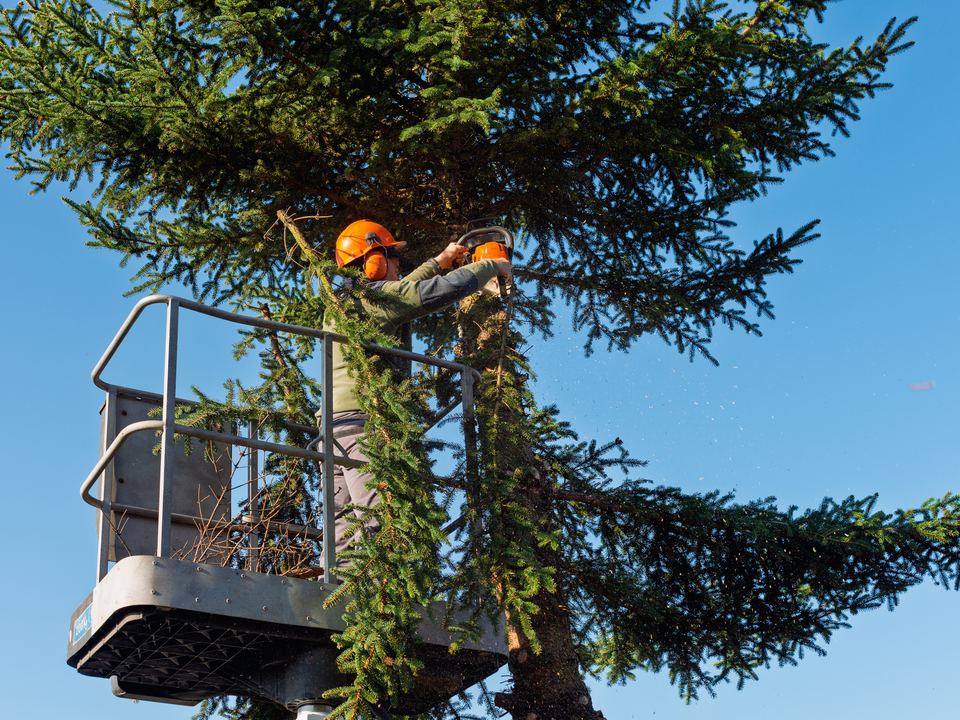
Every cut changes how a tree grows for the rest of its life. Pruning is where experience shows — and where the lack of it shows for decades.
Pruning is the removal of whole limbs: to clear a roof or a driveway, to take out dead or damaged wood, to open a crown that has grown too dense, or to correct the structure of a young tree so it never needs rescue work later. A saw can take a limb off in seconds. Knowing which limb, where to cut it, and what the tree will do about it over the next twenty years is the part that takes a lifetime to learn.
Why we call it an art
A tree is not a hedge. It does not grow back the way you cut it; it responds to every cut by pushing new growth somewhere else. A good pruner is reading the tree before the saw comes out: where its weight sits, which stems are competing to be the leader, which limbs are attached well and which are only hanging on, where the wind and the snow will load it next winter. Then they take only what moves the tree toward a stronger, better-balanced shape.
Done well, pruning is almost invisible. A month later the tree simply looks like a healthier, more graceful version of itself, and nobody can tell where the cuts were. Done badly, it shows for the rest of the tree’s life.
What bad pruning looks like
You have seen all of these around the Denver metro, usually without knowing what you were looking at:
- Topping. Cutting the top of a tree back to stubs to “shrink” it. The tree answers with a flush of fast, weakly attached sprouts that are taller again in a few years and far more likely to break, while decay works down from every stub. We never top a tree.
- Flush cuts and stubs. Trees do not heal a wound; they seal it off. That only works when the cut is made just outside the branch collar, the slightly swollen ring where a limb joins the trunk. Cut into the collar (a flush cut) and the wound is bigger than it needed to be; leave a stub and the tree cannot close it at all. Both invite decay into the trunk.
- Torn bark. A heavy limb cut in one pass peels a strip of bark down the trunk as it falls. We take big limbs in three cuts so that never happens.
- Lion-tailing. Stripping out all the inner branches and leaving tufts of leaves at the ends. It looks tidy from the street, but it moves the weight out to the tips — exactly where the next wet spring snow will hang on it.
- Over-thinning. Taking more than the tree can afford in one season. The leaves are the tree’s income; take too many and it spends years recovering. As a rule we take well under a quarter of the live crown in a visit, and less on old or stressed trees.
Why Front Range trees need it done right
Our trees live a hard life: dry air, alkaline soil, hail, chinooks, and above all heavy wet snow that arrives in April or October while the leaves are still on. A tree with good structure — one strong leader, well-spaced limbs, no tight forks with bark trapped between them — sheds that load. A tree with bad structure, or with bad pruning in its history, is the one in the street the next morning.
That is why the most valuable pruning we do is often on young trees. A few well-placed cuts in a tree’s first ten or fifteen years set its structure for the next hundred, and cost a small fraction of what it takes to correct, cable or remove a large tree later.
Experience you can see in the cut
Most tree work can be learned in a season. Pruning cannot. It takes years of watching how each species answers a cut — how a silver maple sprouts, how an elm seals, how a spruce never grows back from bare wood — before you can look at a tree and know what it will be in ten years.
Arbor Pro has worked on Denver’s trees since 1983, and our workers are taught by an arborist with more than 50 years in the trade. Many of the trees we prune today are trees we first shaped decades ago, and we have seen what happened afterward to the trees that someone else topped, stubbed or stripped. That long view is the difference between a crew that removes branches and a company that manages trees.
When you hire us you get:
- cuts at the branch collar, big limbs in three cuts, and no topping;
- clean-up of everything we cut, chipped or hauled away;
- a record of what we did and when the tree should be seen again.
When to prune
Most deciduous trees are best pruned while they are dormant, from late fall through winter: without leaves we can see the whole structure, the tree loses little stored energy, and most insects and diseases are inactive. Fruit trees, crabapples and pears do best in late winter, which also keeps fire blight from spreading. Spring-flowering trees are pruned right after they bloom, and elms outside the season when the bark beetles that carry Dutch elm disease are flying. Dead, broken or hazardous limbs come off whenever we find them.
Not sure whether a tree needs pruning or trimming? The difference is how much comes off and why, and the two are often done in the same visit. Book an inspection and an arborist will walk your trees with you.
What pruning costs
Pruning is priced per tree after a free visit, and the price is in writing before the first cut. Size, how much comes off, access for the truck or the climber, and what the branches are over set the number. A tree that has been pruned on a regular cycle is quicker, and cheaper, than one that has been let go for years. The estimate is free and does not change once we start.
Questions we hear about pruning
How much does tree pruning cost?
It depends on the tree: size, how much needs to come off, whether the bucket truck reaches it or a climber goes up, and what sits under it. We price each tree after a free visit and give you the price in writing before the work starts. Trees pruned on a regular cycle cost less each time than a tree that has gone years without.
When is the best time to prune trees in Colorado?
For most deciduous trees, late fall through winter, while they are dormant: the whole structure is visible, the tree loses little stored energy, and most insects and diseases are inactive. Fruit trees, crabapples and pears do best in late winter, which also keeps fire blight from spreading. Spring-flowering trees are pruned right after they bloom, and elms outside the season when the bark beetles that carry Dutch elm disease are flying. Dead, broken or hazardous limbs can come off at any time of year.
How much of a tree can be pruned at once?
Well under a quarter of the live crown in one visit, and less on old or stressed trees. The leaves are the tree's income; take too many and it spends years recovering.
Is topping a tree bad for it?
Yes. Cutting a tree's top back to stubs makes it answer with a flush of fast, weakly attached sprouts that are taller again within a few years and far more likely to break, while decay works down from every stub. We never top a tree.
Should pruning cuts be painted or sealed?
No. Trees do not heal a wound; they seal it off from the inside, and a correct cut just outside the branch collar lets them do that. Paints and wound dressings do not stop decay and can trap moisture against the wood.
What is the difference between pruning and trimming?
Pruning removes whole limbs, for clearance, safety, structure or light. Trimming is the lighter, more frequent work of thinning, shaping and raising a canopy. The difference is how much comes off and why, and the two are often done in the same visit.
How often should my trees be pruned?
Most mature shade trees on the Front Range do well on a two- to three-year cycle. Young trees benefit from a few well-placed structural cuts every few years during their first ten or fifteen years, which sets their shape for the next hundred.