Storm damage and emergency tree service
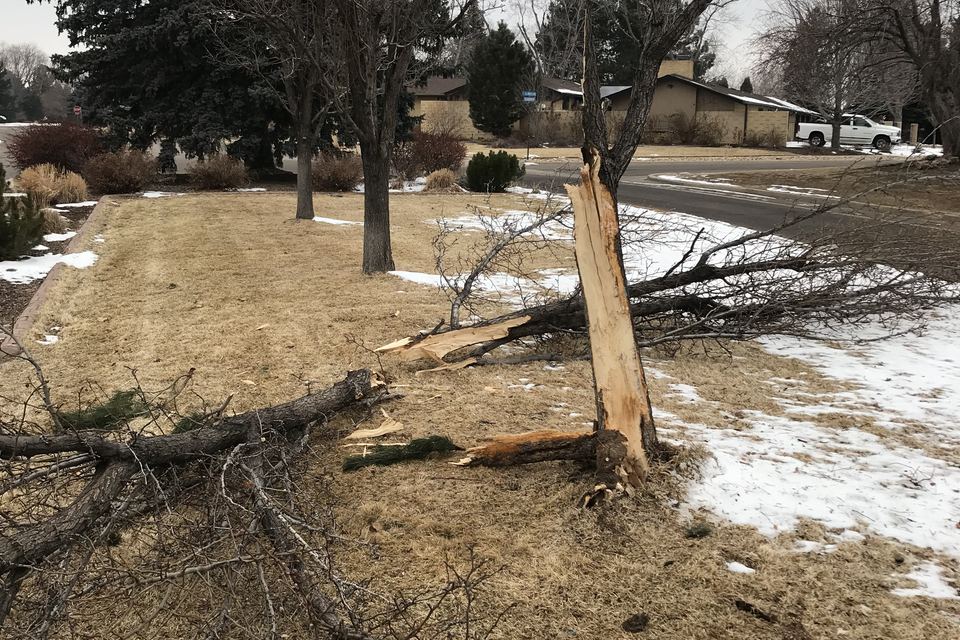
Colorado weather can turn in an hour, and sometimes the trees pay for it. When you need help, call.
Front Range winds and heavy spring snow bring down limbs and whole trees every year. When one is on your house, your car or across your drive, we can get a crew there, clear it safely, and make the rest of the tree safe until it can be properly pruned.
If insurance is involved, call us before you call them. Documentation and an arborist’s assessment make the claim go smoothly, and we have done it many times.
The cheapest storm damage is the kind that never happens. A free inspection before the season finds the weak unions, the dead wood and the over-extended limbs while there is still time to prune or brace them.
What emergency tree work costs
Storm work is priced by the job: what is down, what it is on, what it takes to get it off safely (a crane if a trunk is on a roof, a lift and climbers for hung-up limbs), and what has to be hauled. We tell you the price before the crew starts. If insurance is involved, call us before you call them: an arborist’s assessment and photos from the scene make the claim go smoothly, and the insurer usually pays for making the structure safe.
Questions we hear after a storm
How much does emergency tree removal cost?
It depends on what is down and what it is on. A limb on the lawn is a quick job; a trunk on a roof needs a crane and a careful lift. We tell you the price before the crew starts, and when insurance is involved we document the scene so the claim covers it.
A tree is on my house. What do I do first?
Keep everyone out from under it, and if a wire is involved, stay away and call the utility. Then call us. Take photos before anything moves if you safely can, and call your insurer after you have talked to us; we help with the documentation.
Will insurance pay for it?
Usually, when the tree damaged a structure: removing the tree from the house, the car or the fence and making the site safe is generally covered. A tree that fell in the yard and hit nothing often is not. We have done the paperwork many times and can tell you what to expect.
Can the rest of the tree be saved?
Often. We make it safe first, then an arborist looks at what is left. A tree that lost one limb can usually be pruned and kept; one that split at the trunk usually cannot. You get an honest answer, not a sales pitch for a removal.
How do I prevent storm damage?
A free inspection before the season finds weak unions, dead wood and over-extended limbs while there is still time to prune or cable them. The cheapest storm damage is the kind that never happens.