Fire mitigation
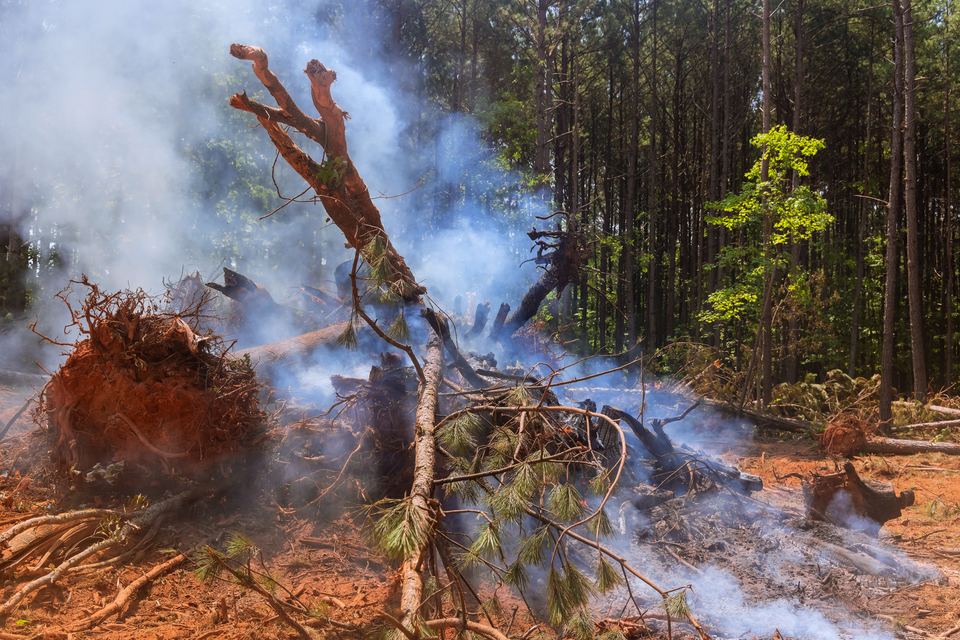
A wildfire reaches a house through the plants around it. Fire mitigation is the work of taking that path away before it is needed.
Along the west side of the metro, from Golden down the hogback and anywhere a yard backs onto open space, the trees and shrubs around a home are also fuel. Most houses lost in a wildfire are not reached by a wall of flame. They are lit by embers landing in dry plants and debris next to the walls, or by a ground fire that climbs low branches into the crowns of trees beside the roof. Mitigation removes those routes.
Defensible space, zone by zone
The Colorado State Forest Service describes the area around a home in three zones, and the work is different in each.
- Zone 1, the first 5 feet from the house. Nothing that burns. Shrubs, junipers, dry mulch and overhanging branches come away from the walls, the deck and the roofline.
- Zone 2, out to about 30 feet. Trees and shrubs stay, but apart. We thin so crowns do not touch, remove the low limbs that would carry a ground fire up into a tree, clear brush from under trees, and take out dead and dying trees.
- Zone 3, out to about 100 feet or the property line. Thinning and clean-up to slow a fire and drop it to the ground before it reaches the inner zones. On a slope these distances grow, because fire moves faster uphill.
What we do on site
- Remove ladder fuels. Low limbs are pruned up off the ground, and shrubs under trees are cleared, so a grass fire stays a grass fire.
- Thin and separate crowns. Selected trees come out so fire cannot run from one crown to the next.
- Take out dead, dying and beetle-killed trees. Standing dead wood is the driest fuel on a property.
- Remove junipers and other resinous shrubs near the house. A juniper under a window is the single most common way a house catches.
- Chip or haul everything. Nothing we cut is left in a pile to become next year’s fuel.
Done by people who know trees
Mitigation is not clear-cutting. The aim is a property that is safer and still has its trees, and the trees that stay should be the healthy, well-formed ones. Every cut we make for fire is made the way we make any other: at the branch collar, without stubs or torn bark, on trees chosen because they are worth keeping.
Insurance and HOA requirements
Insurers and homeowner associations in the foothills increasingly ask for mitigation work before they will write or renew a policy. If you have a letter listing what is required, show it to the arborist at the inspection and we will quote the work against it.
What fire mitigation costs
Mitigation is priced by the property after a free visit: how much has to come out, the slope, access for the truck and chipper, and what has to be hauled. The price is in writing before we start.